Umbilical incision and two tiny stab incisions in the right and left upper quadrants.
Confirm that the pylorus is hypertrophied by inspection and palpation with fingers or atraumatic forceps.
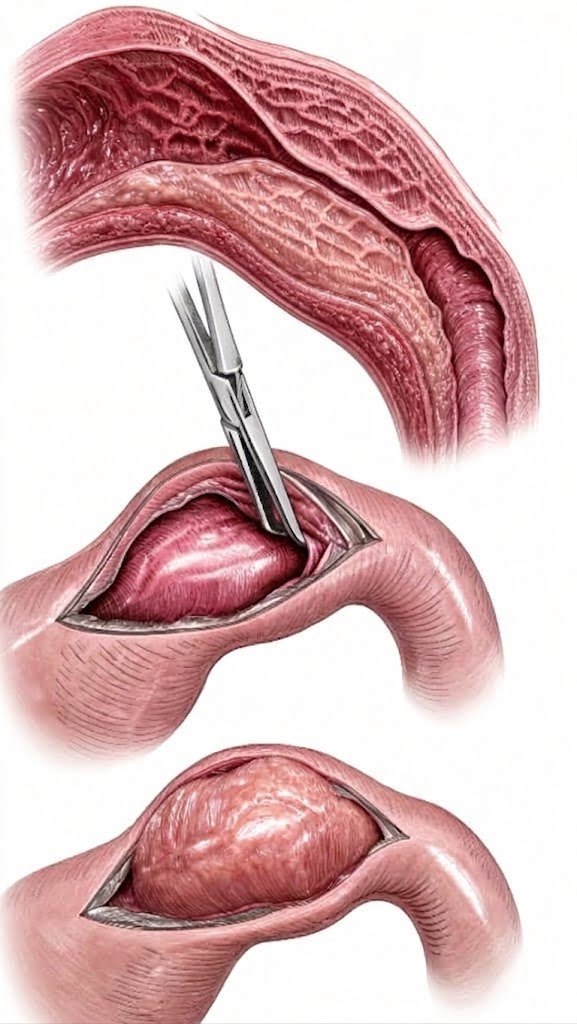
Incise the serosa and the superficial layer of the pyloric muscle, using either cautery or a scalpel. The incision must extend into normal antrum proximally and stop just short of the pyloric channel to avoid the duodenal mucosal recesses into the channel.
Using a blunt tip pyloric muscle spreader, spread the hypertrophied muscle starting in the middle of the channel and proceeding proximally and distally. The muscle must be spread enough to make sure that there are no more muscle fibers covering the submucosa that will bulge.
Rock the cephalad and caudal edges of the spread muscles to make sure they move independently, indicating that the ring of the pylorus has been broken.
Test for mucosal perforation by gently milking the duodenum and the antrum, looking for leak age.
Repair leak with 4-0 vicryl ± omental patch. If in the myotomy then repair, rotate 180°, & repeat myotomy.
Educational aid only. Verify every dose, indication, and guideline against current institutional protocol. This is not a substitute for clinical judgment.